Core Platform vs. Market Vertical: Dividing the Work
To ensure scalable and rapid deployments, DeeperPoint divides the building blocks of a vertical marketplace into two clear layers:
Generic Participant Roles
DeeperPoint operates on a highly generic, extensible role schema designed to fit any complex transaction corridor:
- Supply: The side offering services, products, capabilities, or craft (e.g., machine shops, independent contractors).
- Demand: The side looking for or buying those services and products (e.g., specialized buyers, local clients).
- Facilitators: Trusted third parties who help make the trade happen safely (e.g., quality inspectors, transport handlers, local verifiers).
The 5-Phase Creation Timeline
Setting up the server environment
The open-source project provides pre-packaged server building blocks (software containers) that configure the matching engine and search database automatically.
Defining your market rules
The founder configures a simple settings file to define the unique traits, qualifications, and questions required for their specific market.
Collecting industry documents
The founder gathers standard contracts, government regulations, and industry guidelines and loads them into the reference library.
Aligning industry terms
The core software analyzes the loaded documents, and the founder reviews the results to ensure the system understands precise local industry terms.
Extracting legal workarounds
The founder finds and maps the alternative paths or "escape hatches" in regulations that allow smaller businesses to qualify.
Saving compliance settings
The founder locks these workaround options directly into the market's settings file so they can be triggered automatically.
Creating simulated users
The founder designs a diverse group of mock participants (mock buyers, sellers, and inspectors) to test how they interact under different conditions.
Running sandbox matching tests
The core engine runs simulated trades and matches between the mock participants to prove the marketplace arithmetic works before launching to real users.
Building the user screens
The founder builds a clean, lightweight web page or mobile screen tailored to their users, connecting it directly to the matching engine.
Writing the match stories
The core software translates complex matching scores into simple, step-by-step plain English stories that explain to both sides why they are a great fit.
Welcoming new users
The founder creates simple guidebooks, manuals, and value explanations to help real-world businesses sign up easily.
Updating the library
The founder sets up alert channels so when a match is blocked by a missing rule, they can quickly update the library with a new workaround.
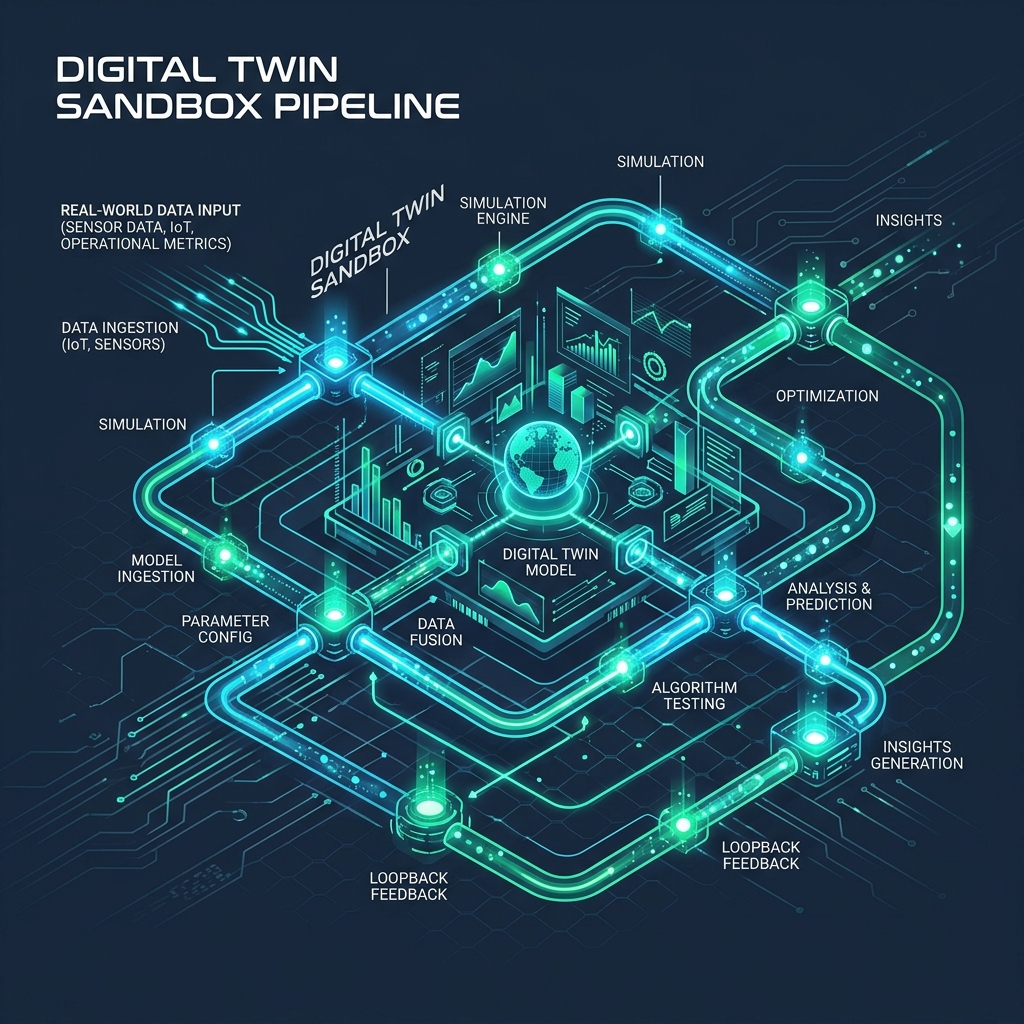
The Digital Twin Architecture
Before launching to real businesses, the founder sets up a **Digital Twin** (a local computer simulation) to test their marketplace. They create three groups of simulated users:
- Group A (Fully Compliant): Confirms that users who clear every standard match immediately.
- Group B (Has Workarounds): Proves that users who carry alternative qualifications (workarounds) successfully match instead of getting blocked.
- Group C (Unqualified): Verifies that unqualified users are safely blocked and guided on how to improve.
CommonContext Continuous Curation Loops
Loop 1: Preparing the Ground
Before launch, the founder uploads industry rulebooks to teach the software the baseline terminology and workarounds.
Result: Calibrates matching models to regional industrial realities.Loop 2: Automatic Profile Helping
If a business gets blocked during matching because of a missing qualification, the software automatically messages them to ask for their workaround and updates their profile instantly.
Result: Unlocks blocked matches in minutes without manual support.Loop 3: Closing the Curation Gaps
If a transaction is blocked by a brand new regulatory barrier, the system alerts the founder, who quickly uploads the appropriate workaround to make the market smarter.
Result: System gets progressively smarter with every match.Ready to review the software?
Explore the core Cosolvent suite and download the MIT licensed transaction database blocks.