Originally published on deeperpoint.com, July 2025.
Question
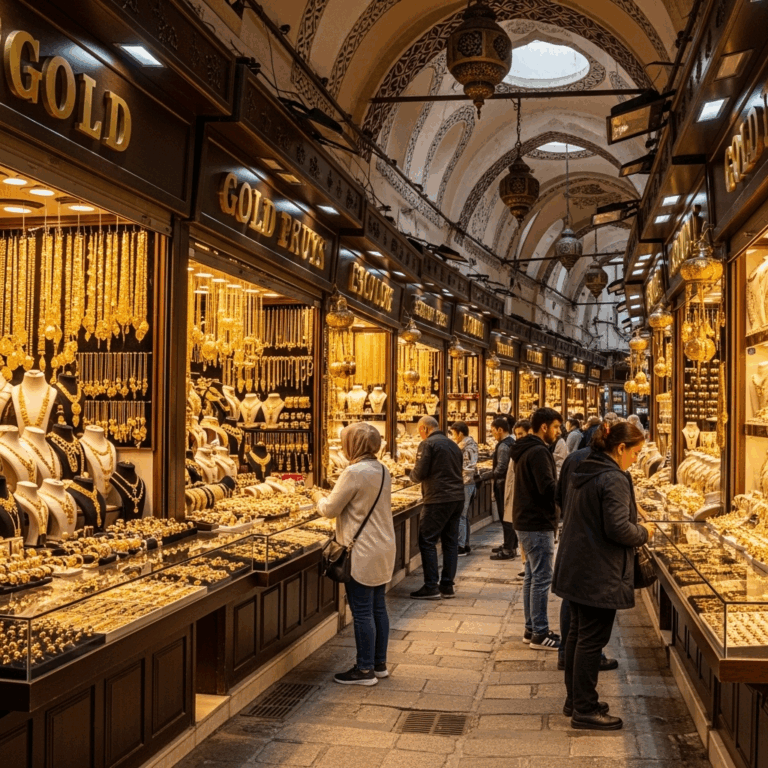
One of the characteristics of an AI-enhanced market website is that it is easy to spontaneously make galleries with subgroupings based on subtle criteria. There is a phenomenon for stores in older cities where small stores selling similar goods or catering to a common market tend to cluster together in one location. An example is the “gold street” in the Grand Bazaar in Istanbul. Using GrainPlaza as an example, how can we display the subtle AI profiles so as to pick up the city clustering meme?
Clustering as Market Thickening
Information Density: The Istanbul Gold Street creates artificial market thickness by:
- Concentrated discovery: Buyers can efficiently compare subtle variations (22k vs 24k, Turkish vs Italian styles)
- Reputation spillovers: Quality vendors attract quality neighbors, creating trust zones
- Knowledge accumulation: Specialized expertise clusters (craftsmen, appraisers, traders)
Reduced Search Costs:
- Buyers and sellers are widely scattered (physically or virtually) and thus have difficulty learning about each other — clustering solves this by making comparison shopping efficient.
Network Effects in Clusters:
- Complementary services emerge: In grain clusters, you’d see testing labs, storage facilities, shipping coordinators co-locating
- Specialized financing: Trade credit, commodity financing, crop insurance specialists
- Market makers: Brokers who understand the subtle differences between, say, Montana vs North Dakota spring wheat
Quality Signaling Through Location:
- Entrance barriers: Premium districts self-select for quality (high rents, reputation requirements)
- Peer monitoring: Vendors police each other’s quality to protect district reputation
- Collective marketing: “Grain Quarter” becomes a brand itself
Temporal Clustering: Unlike physical spaces, you can create time-based clusters:
- “Harvest Season Active Sellers” (September)
- “Contract Negotiation Window” (January–March)
- “Spot Market Opportunities” (real-time)